
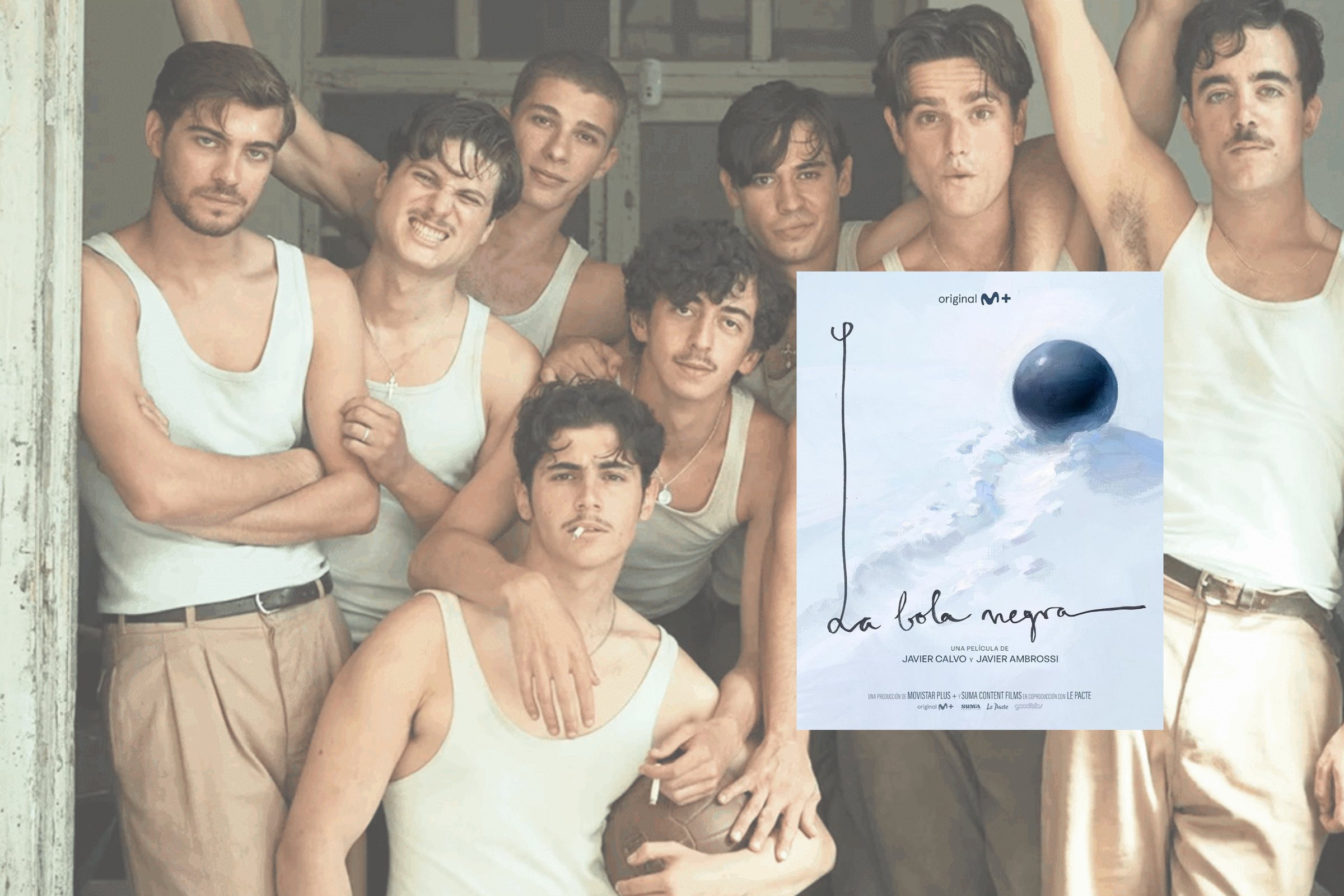
From Lorca’s four pages to the Oscar race
Best Director at Cannes, standing ovation in Toronto, and now Spain’s official candidate for the Academy Awards.
Los Javis’ The Black Ball opens in Spanish cinemas on 25 September 2026 – and takes us on a journey through three Spanish landscapes, each holding a piece of history.
A story Lorca never finished
In the casinos and private clubs of 1930s Granada, a single black ball dropped into the ballot box was enough to reject a candidate.
Federico García Lorca began a novel on this idea: a young man “blackballed” because of rumours about his homosexuality. He only wrote four pages before he was murdered in August 1936.
Almost ninety years later, Javier Calvo and Javier Ambrossi – better known in Spain as Los Javis – have turned these fragments, together with Alberto Conejero’s play La piedra oscura, into The Black Ball.
A 159-minute epic shot on 35 mm film, weaving together three lives across three eras:
- 1932, Granada – Carlos (Milo Quifes) applies to join the city’s most exclusive casino and is rejected by secret ballot.
- 1937, the northern front of the Civil War – Sebastián (Guitarricadelafuente, in his screen debut), a musician in Franco’s army, falls in love with Rafael Rodríguez Rapún (Miguel Bernardeau), a wounded Republican prisoner who had been Lorca’s last love.
- 2017, Madrid – Alberto (Carlos González), a writer, digs into a family secret with his mother Teresa (Lola Dueñas) and slowly reconnects the threads of the past.
With Penélope Cruz as a nightclub singer and Glenn Close as an American scholar, the film tells a story of desire, silence and inheritance – everything that families and society tried to hide.
Its directors call it “an epic gay drama for everyone”.
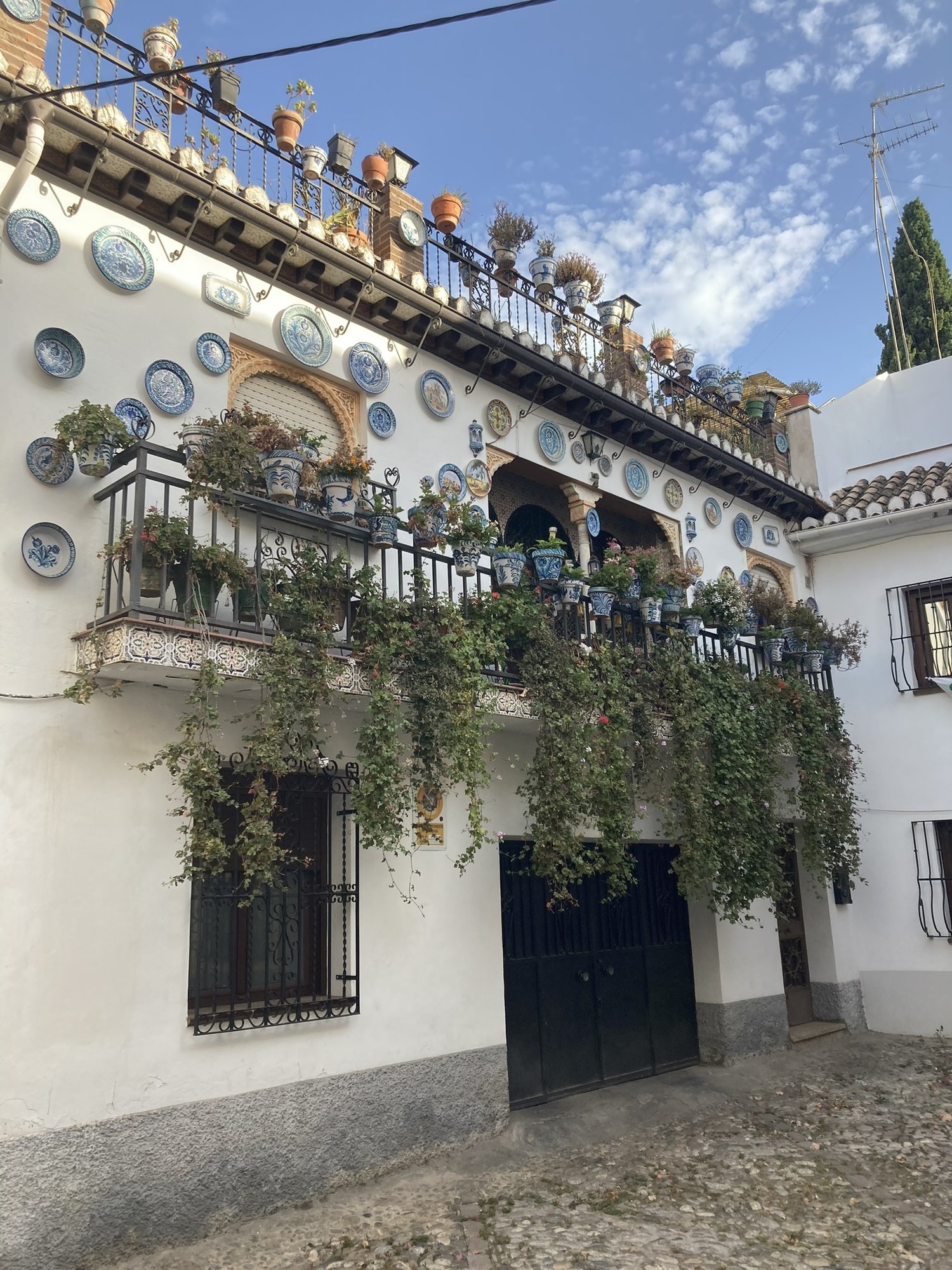
El Albaicín
Granada, Andalusia
The Moorish quarter facing the Alhambra – Lorca’s Granada in the 1932 storyline.
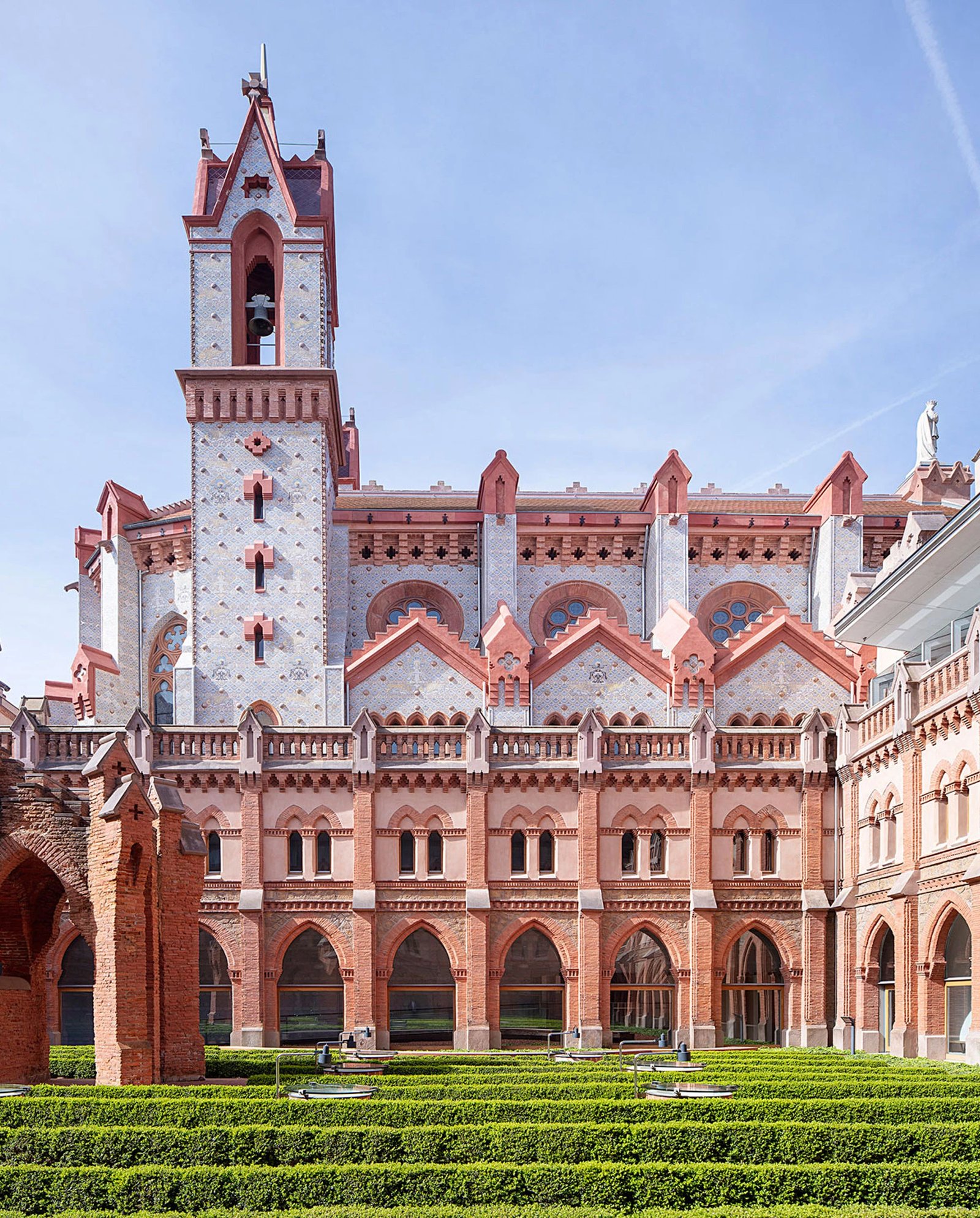
Former Pontifical University
Comillas, Cantabria
Its Major Seminary became a Civil War field hospital for the 1937 storyline.
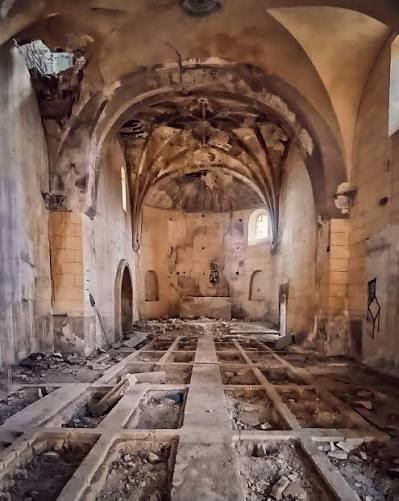
Castil de Carrias
Belorado, Burgos – Castile and León
A village uninhabited since 1994, turned into a war-torn set where filming began.
Why the locations matter
In The Black Ball, places are not a backdrop: they are witnesses.
Each era of the story is anchored in a real landscape with its own memory – the whitewashed alleys of Lorca’s Granada, a monumental seminary on the Cantabrian coast, a village of Castile emptied by time.
This is exactly what screen tourism is about: stepping into a scene and discovering that the history behind it is even stronger than the fiction.
El Albaicín, Granada: Lorca’s city in 1932
Granada is the emotional heart of the film. The crew took over Plaza Nueva – recreated with period cars, Republican flags and more than 200 extras – as well as Plaza de Santa Ana, the Carrera del Darro and the steep streets of the Albaicín.
The old Moorish quarter is listed as a UNESCO World Heritage Site alongside the Alhambra. Between its cármenes, whitewashed walls and viewpoints facing the Alhambra, this is the Granada Lorca knew and wrote about.
Travel tip: continue your walk to the Huerta de San Vicente, the Lorca family’s summer house, now a museum, which also appears in the film.
Comillas, Cantabria: a seminary turned field hospital
On the Cantabrian coast, the former Pontifical University of Comillas dominates the town from its hill. Its Major Seminary, founded at the end of the 19th century under the patronage of the Marquis of Comillas, was transformed into a Civil War field hospital.
This is where the 1937 story of Sebastián and Rafael unfolds – and the choice is no coincidence. The real Rafael Rodríguez Rapún, wounded on the northern front, died in a military hospital in Cantabria in August 1937, one year after Lorca. He still rests in Santander’s Ciriego cemetery.
Travel tip: Comillas is also one of Spain’s great modernist towns, home to Gaudí’s El Capricho. The crew also filmed nearby, around Oyambre beach and in Herrerías.
Castil de Carrias, Burgos: the silence of an empty village
This is where it all began, on 26 August 2025. Hidden in the hills near Belorado, between Briviesca and the Camino de Santiago, Castil de Carrias has had no inhabitants since 1994.
Its stone houses, the arcaded church of Santa María with its half-collapsed bell tower and the old building that once housed both the school and the town hall offered an authentic setting for the war scenes.
The art department added false façades, hundreds of extras were hired from the surrounding area and Briviesca’s firefighters secured the explosion sequences.
Travel tip: an easy detour for pilgrims walking the Camino through Belorado. The buildings are in ruins, so visit with care and respect – a striking reminder of how cinema can put Spain’s emptied villages back on the map.
The road to Hollywood
In September, the Spanish Film Academy chose The Black Ball over Rodrigo Sorogoyen’s El ser querido and Alauda Ruiz de Azúa’s Los domingos to represent Spain in the Best International Feature Film category.
The film arrives with serious momentum: Best Director award at Cannes (shared with Paweł Pawlikowski), an audience award in Sydney, a triumphant reception in Toronto and excellent reviews.
The next steps are already on the calendar. Netflix, which acquired the US rights, will release the film in American cinemas on 6 November before streaming it from 4 December. French audiences will discover it on 16 December with Le Pacte.
Then all eyes will turn to Los Angeles: nominations will be announced on 21 January 2027, and the 99th Academy Awards ceremony will take place on 14 March 2027 at the Dolby Theatre in Hollywood.
Whatever happens that night, the Albaicín, Comillas and Castil de Carrias will still be there – waiting for travellers who want to walk in the footsteps of Lorca, Sebastián and Rafael.
See you in the next chapter of our travel diary!